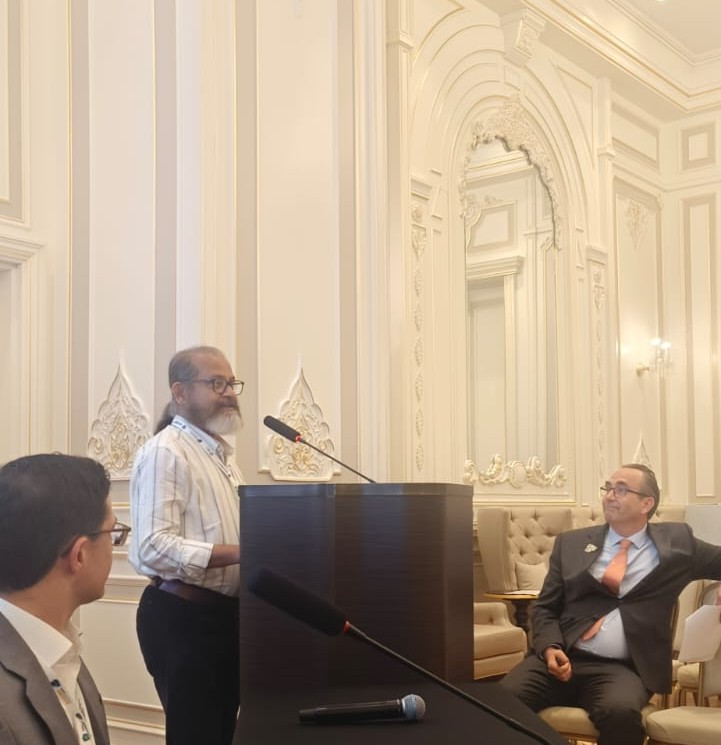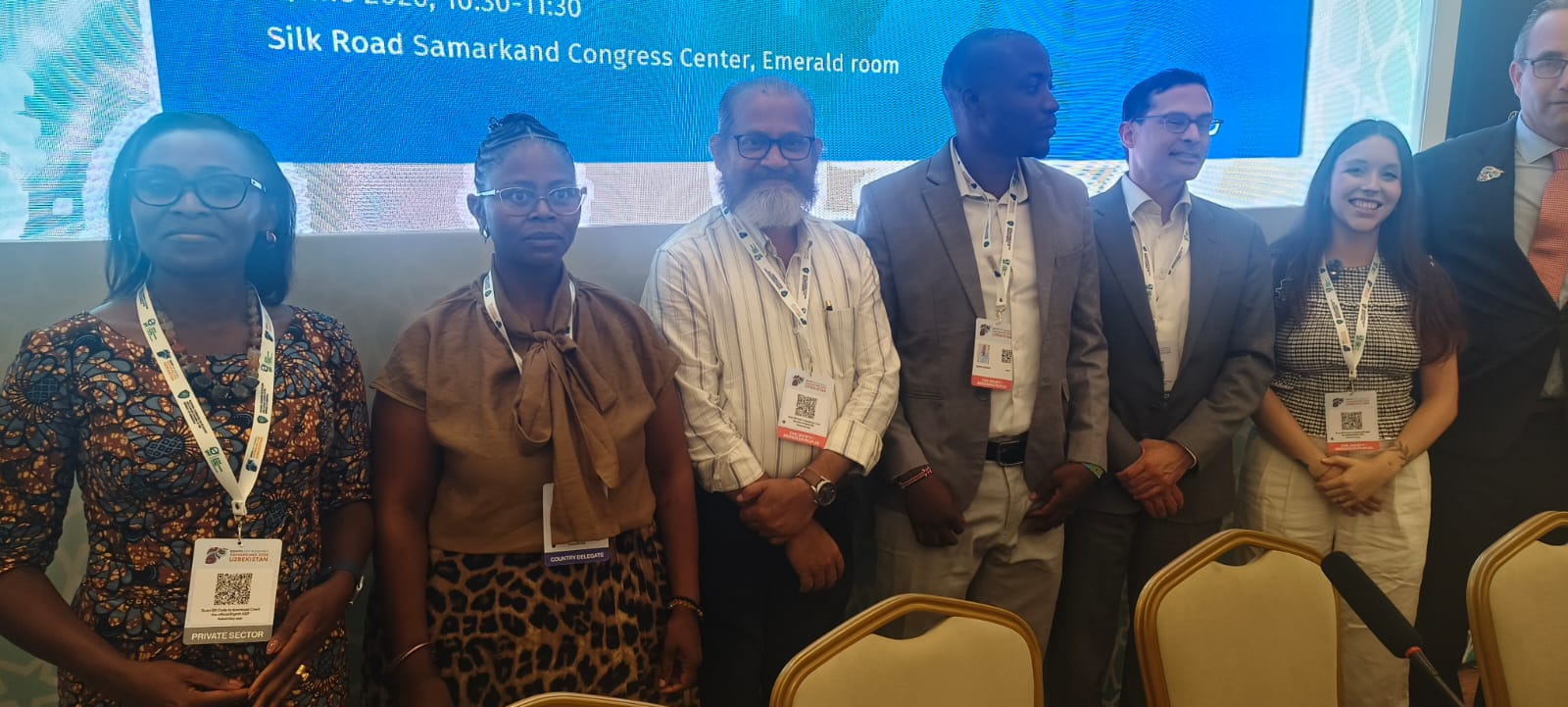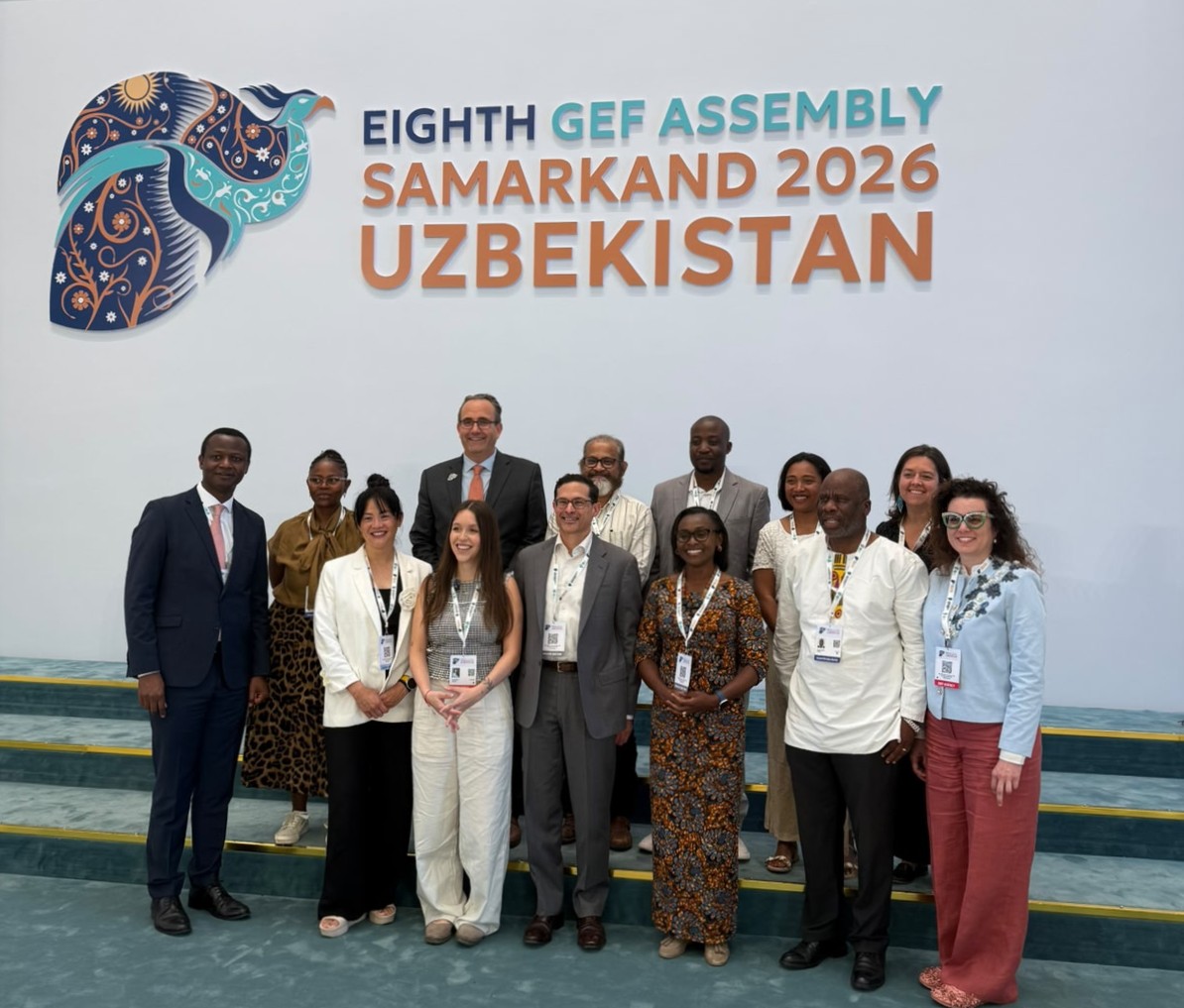
At the Eighth GEF Assembly in Samarkand, Uzbekistan, Dr. Dipayan Dey, Progyan Foundation for Research and Innovation (PFRI), South Asian Forum for Environment, SAFE participated in the side event ‘From Vancouver to Samarkand: Scaling Locally Led Adaptation through Learning, Innovation, and Blended Finance’, held on 3 June 2026.
The session reflected on the journey from the 7th GEF Assembly in Vancouver, where the Inclusive GEF Assembly Challenge was launched, to the current focus on scaling locally led adaptation through innovation, finance, technology transfer, institutional partnerships, and policy convergence. It brought together representatives from GEF, Global Affairs Canada, UNIDO, Africa Enterprise Challenge Fund, The Lightsmith Group, the Department of Environment, Lesotho, Forever Lung, and the Kenyan Youth Biodiversity Network.
Dr. Dipayan Dey spoke in the segment on “Frontline Innovation: Locally Led Pathways to Resilience”. He presented SAFE’s locally-led adaptation wherein regenerative farming was being advanced as an ecosystem-based adaptive farming solution among more than 3,700 marginal agrarian farmers in the highly climate-vulnerable Indian Sundarban of India, highlighting how it could strengthen climate resilience, improve production and supply-side value chains, support emission abatement, and create more inclusive livelihood opportunities for marginal farmers. Within this initiative, PFRI has been contributing through research and monitoring, generating evidence on farm-level resilience, livelihood outcomes, adaptive capacity, and the potential of this locally-led adaptation to inform wider policy uptake and scaling.
Dr. Dey also emphasised the need to move such interventions beyond project-level implementation into policy and finance systems. He called for regenerative farming to be mainstreamed into NDC 3.0, National Adaptation Plans, state-level climate policies, and national net-zero pathways for the primary sector. He underlined the importance of linking such models with public schemes, agricultural banks, microfinance institutions, carbon finance, biodiversity credit mechanisms, and loss and damage financing, including crop insurance and compensation mechanisms for climate-affected farmers.
The wider discussion focused on how grassroots adaptation initiatives could be made scalable and investable through accessible finance, technical capacity, market access, public investment, technology transfer, supportive policy environments, and blended finance mechanisms. Speakers also reflected on the need for regional knowledge platforms, direct market linkages, community-led restoration, youth leadership, and stronger partnerships between governments, investors, civil society, and local communities.
The session reaffirmed that locally led adaptation is not merely a response to climate vulnerability. It is a pathway to equitable resilience, stronger livelihoods, inclusive markets, and transformative climate action at scale.