World Wetlands Day 2026: Agroforestry in Wetlands – Myth or Mission?
2 February 2026 | Kanwar Taal, Begusarai, Bihar; Indian Sundarban; East Kolkata Wetlands; Deepor Beel, Assam
On 2 February 2026, marking World Wetlands Day, the Progyan Foundation for Research and Innovation (PFRI), together with the South Asian Forum for Environment (SAFE), undertook a series of knowledge, research, and community-centred engagements across key wetland landscapes in India. The day’s activities reflected the 2026 theme, “Wetlands and Traditional Knowledge: Celebrating Cultural Heritage,” and highlighted the importance of linking scientific research with local knowledge and practices.
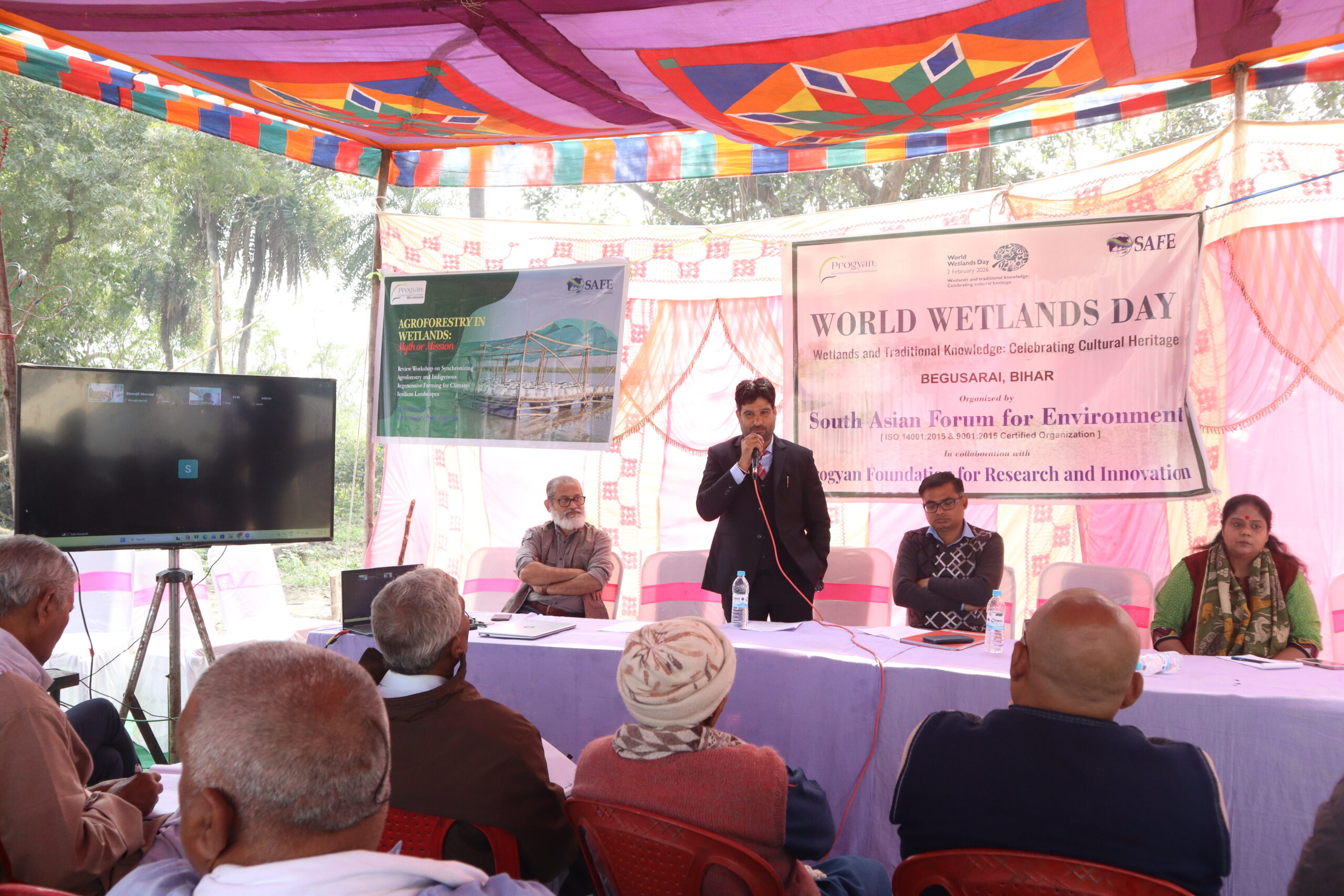
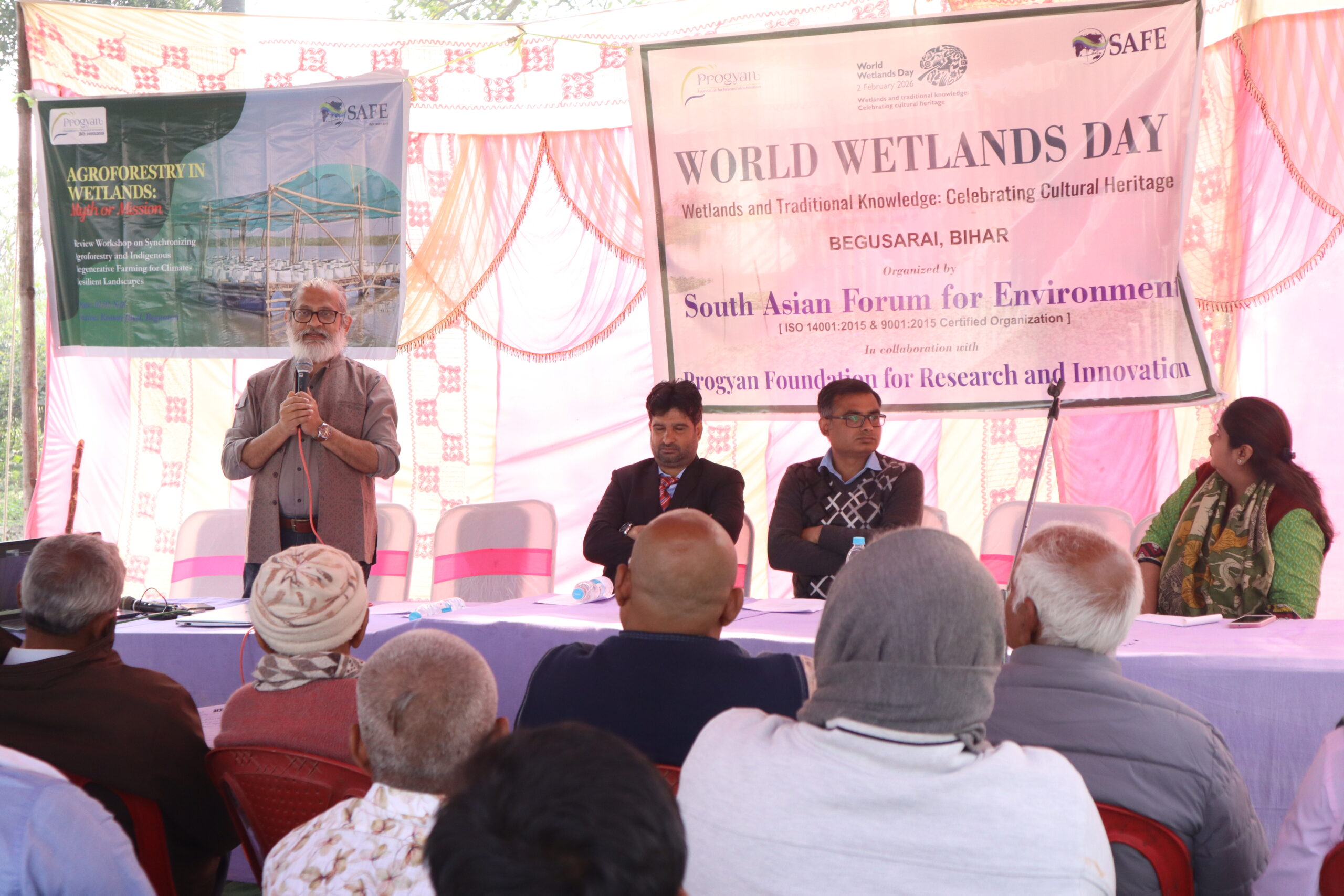
At Kanwar Taal, Begusarai, PFRI and SAFE, in collaboration with the Centre for Atmospheric Sciences (CACS), IIT Madras, organised the one-day review workshop “Agroforestry in Wetlands: Myth or Mission?” The workshop brought together agricultural scientists, policymakers, financial institutions, climate experts, and farmer representatives from 18 Community Development Blocks of Begusarai, with two farmers participating from each block.
Drawing on two years of field-based interventions, the workshop examined how context-specific agroforestry models, nature-based solutions, and indigenous regenerative farming practices can support climate-resilient and carbon-positive agriculture in flood-prone landscapes. Discussions focused on appropriate species selection, carbon and green credit opportunities, convergence with government programmes, and the documentation and validation of indigenous farming practices. Farmers also highlighted concerns related to declining agrobiodiversity and drainage challenges affecting the Kanwar Taal wetland ecosystem.
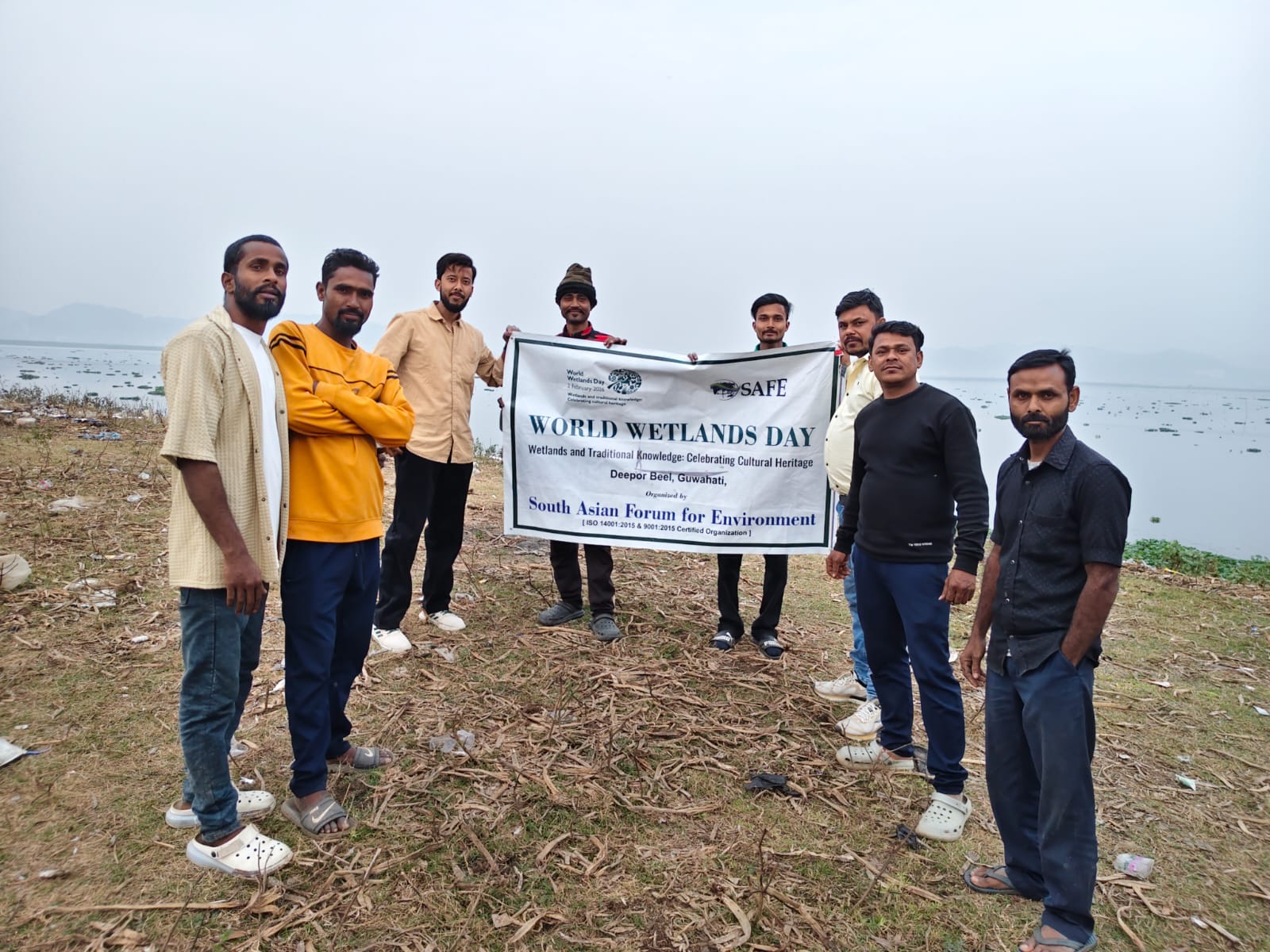
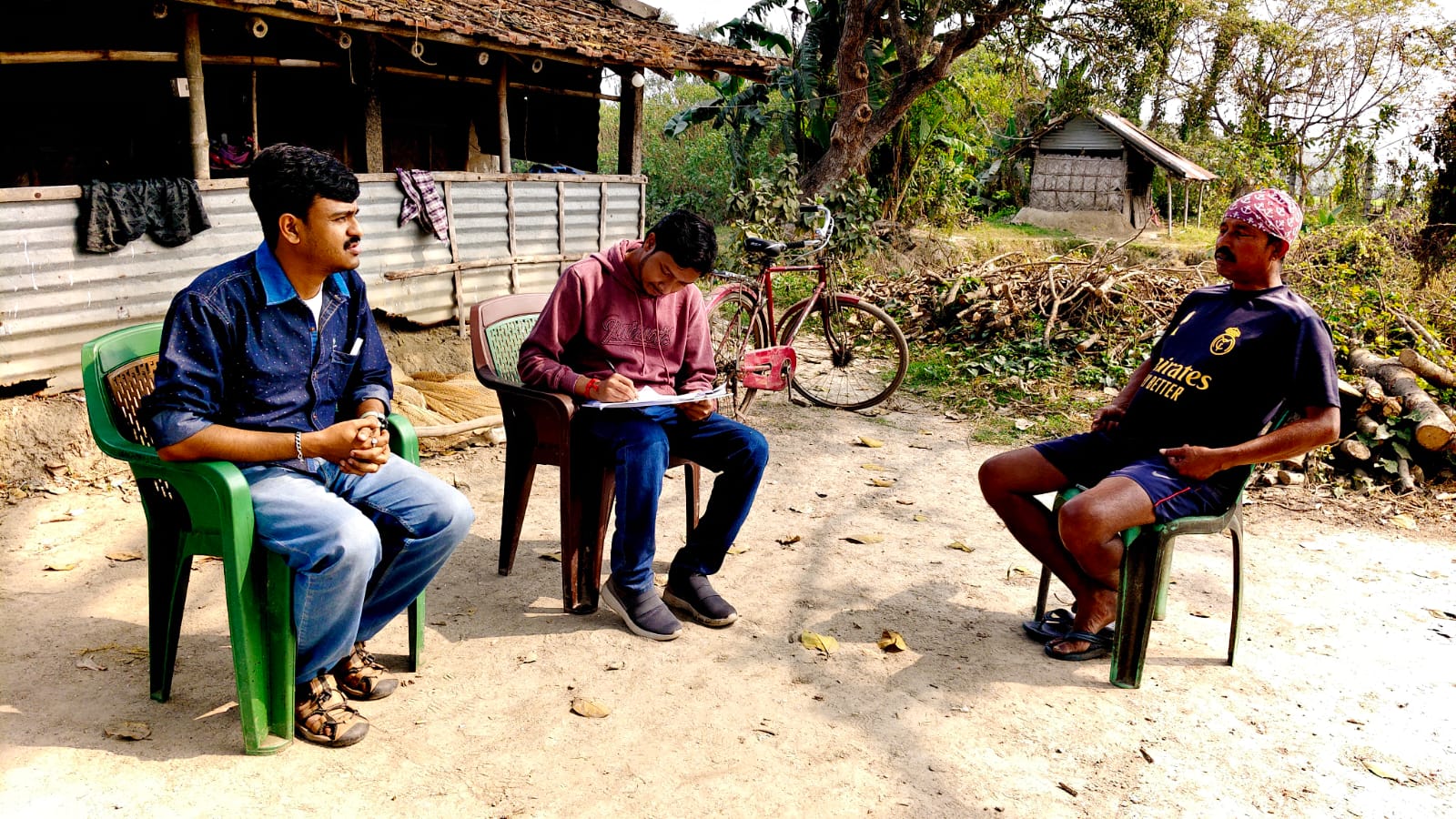
Beyond Kanwar Taal, PFRI and SAFE also marked the day through their continued wetland-based work in the Sundarban, East Kolkata Wetlands, and Deepor Beel, Assam. These engagements highlighted indigenous knowledge, native biodiversity conservation, nature-based livelihoods, flood resilience, habitat restoration, and community participation as important components of wetland conservation.
Together, these engagements reaffirmed PFRI’s approach to wetlands as living landscapes where ecological systems, traditional knowledge, livelihoods, and climate resilience are closely interconnected.